5 Construction Contract Cost-Tracking Software Tools Compared for 2026

Photo by gstudioimagen1 @ freepik
Cost overruns can erase a contractor’s profit before the first payment clears. Too often, teams chase scattered numbers in brittle spreadsheets updated days after costs hit the ledger. Real-time cost-tracking software unites contracts, change orders, and field expenses in a single dashboard, letting managers spot and correct budget drift the same day it occurs.
This guide compares five leading 2025 platforms, highlights their strengths, and shares insights from hands-on testing—helping you pick the system that fits your projects, people, and margins.
Why Cost Tracking Still Breaks Budgets

This may interest you: 4 Ways BIM Helps in Reducing Construction Costs
About 85% of construction projects exceed estimates, and megaprojects can run 80% over budget and 20% late. With industry margins near 3.8%, one overrun can erase a year’s profit.
The problem isn’t one big error—it’s scattered data. Crews log timecards today, engineers file change requests tomorrow, and invoices arrive next week. By the time spreadsheets reconcile, the cost curve has already bent past the point of recovery.
Spreadsheets feel quick but hide risk: version forks, copy-paste errors, and stale entries. On busy sites, “yesterday’s numbers” may trail three purchase orders. Profit survives only when labour, materials, and changes reach one connected system—such as contract cost-tracking software like InEight Contract—the instant money is committed.
How We Compared the Tools
We asked one question: Would this software warn a project manager about an overrun before it’s too late?
We:
- Loaded the same mid-rise project into each system
- Posted a week of real field data—labour, materials, and changes
- Interviewed finance leads using each platform on live jobs
Four factors proved decisive:
- Real-time budget vs. actuals: Instant dashboard updates
- Change-order workflow: Early scope alerts and auto-forecasting
- Accounting integration: No double entry
- Learning curve: Ease for field and finance users
The Top Five Platforms
InEight Contract – Enterprise Control for Capital Projects

Built for large, multi-year programs, InEight rolls contracts, changes, and forecasts into one ledger. In our $120 million test, its earned-value engine recalculated instantly and flagged a 2% variance.
It requires disciplined cost codes and short training, but integrations with SAP and Oracle remove re-entry. For capital programs demanding precision and governance, InEight offers CFO-level visibility.
Procore – Field-Friendly Budget Control
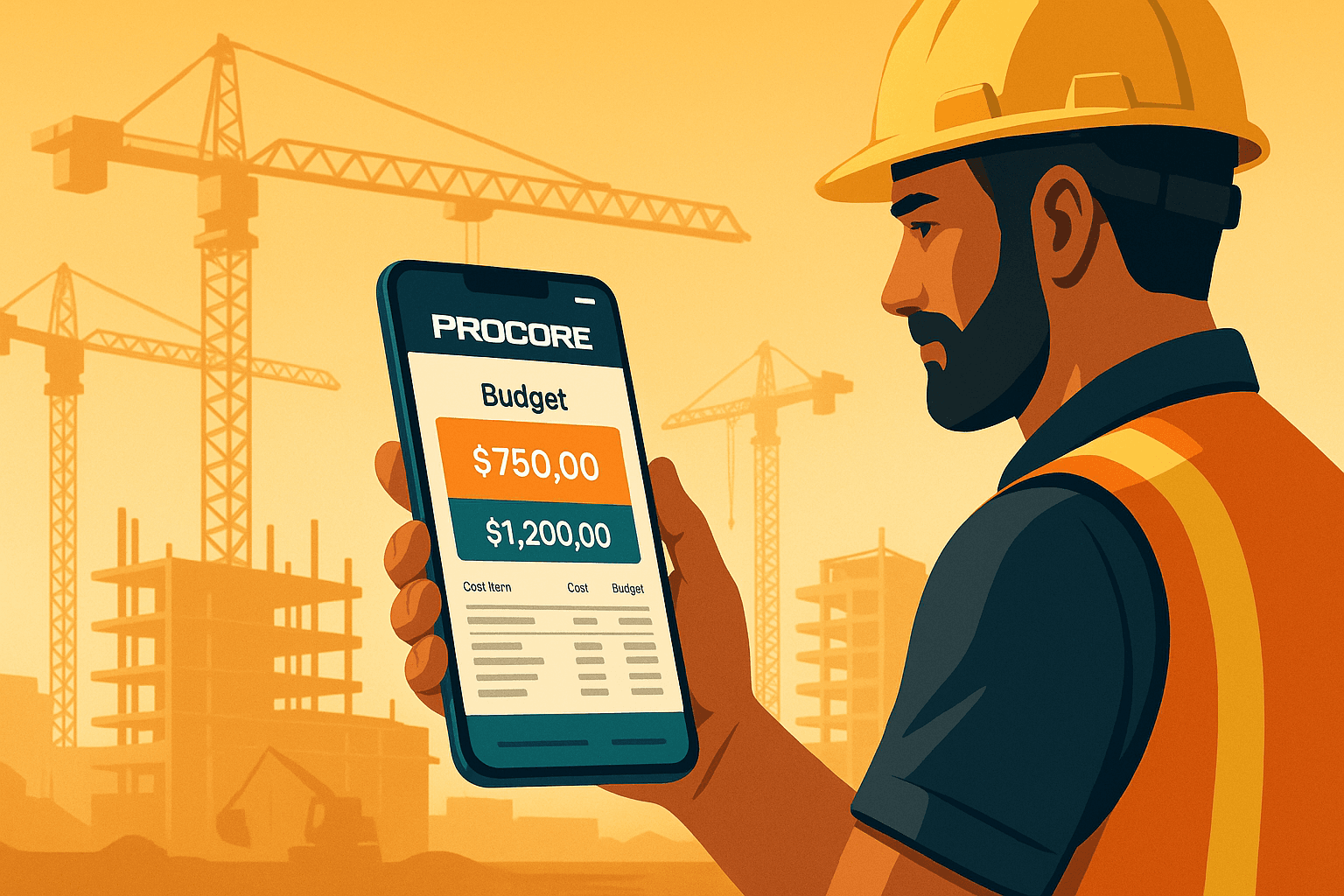
Procore’s Project Financials module shares a workspace with drawings and RFIs. Timecards and receipts entered via its iOS app refreshed budgets within seconds.
Change orders follow a tap-approve-update loop. With 17k customers and a 4.7-star mobile rating, Procore suits firms already using its document tools. It’s heavy for cost control alone but unmatched for real-time field insight.
Autodesk Build – Linking Design Intent to Dollars

Autodesk Build ties cost data to design models. Moving a wall in Revit and Build creates a potential change order while flagging the affected sheet and budget line.
Its dashboard displays budgets, commitments, and forecasts side by side. Used on over a million projects, Build fits design-build teams seeking BIM-to-budget visibility with minimal setup.
Oracle Primavera Unifier – Governance Above All
Unifier routes every dollar and document through configurable workflows with a full audit trail. Linked with Primavera P6, forecasts shift automatically as schedules move, revealing slippage early.
Setup takes time, and many owners use Oracle partners, but for public agencies or megaproject PMOs, its rigour and security justify the investment.
Trimble Viewpoint Vista – Accounting Roots, Project Smarts
Trimble Viewpoint Vista unites job cost, payroll, billing, and the ledger in one database—no imports or version errors. Labour hours posted from the Field Management flow instantly to payroll and job-cost reports.
With 8k contractors onboard, including nearly half the ENR 400, Vista fits finance-led firms that value accuracy over interface polish.
Feature Snapshot
Platform | Live Dashboard | Change-Order Workflow | ERP / GL Integrations | iOS Rating (Oct 2025) | Best For |
InEight Contract | Yes, earned-value | Multi-tier approvals | SAP, Oracle, JD Edwards | 3.8★ | Capital programs > $100M |
Procore Financials | Instant field updates | One-click mobile | Sage 300, Viewpoint, QuickBooks | 4.7★ (40k reviews) | GCs / CMs 20–2k users |
Autodesk Build | BIM-linked cards | Visual sheet-to-budget | NetSuite, QuickBooks, CMiC | 4.4★ | Design-build teams |
Oracle Unifier | Cash-flow & funding views | Fully configurable | Oracle Fusion, SAP, P6 | 5.0★ | Public owners / PMOs |
Trimble Vista | Inside ERP core | Standard GL-tied | Native Vista tables | 2.8★ | Contractors > $50M revenue |
How to Choose the Right Platform

- Pinpoint your pain. Identify the gap—late changes, siloed accounting, or field-data lag—that drains profit.
- Match the tool to the culture.
- InEight and Unifier reward structured workflows.
- Procore and Autodesk Build fast-moving field teams.
- Vista fits finance-first firms focused on precision.
- Weigh the Total Cost of Ownership. A “cheap” license that still needs spreadsheets can erase savings. Automated systems cut admin overhead 25–35% and pay back within 12 months.
- Pilot before rollout. Track two KPIs: variance-detection speed and data confidence. The platform improves both earnings deployment.
Conclusion
In 2025, profit protection depends on live cost visibility. Whether your focus is governance, field usability, or accounting rigour, the right platform surfaces overruns before they erode margins—and turns cost tracking from an afterthought into a competitive advantage.
Frequently Asked Questions
Q1. What does cost-tracking software do?
It unifies budgets, commitments, change orders, and actual costs in real time, replacing spreadsheets.
Q2. Why not just use Excel?
Spreadsheets delay visibility and invite formula errors. Dedicated systems sync data instantly and keep one version of the truth.
Q3. Which tool fits large capital projects?
InEight Contract or Oracle Unifier—both excel in earned-value control and ERP integration.
Q4. Which is the most field-friendly?
Procore, thanks to its mobile workflow and instant updates.
Q5. What if we design in Revit?
Choose Autodesk Build for BIM-linked cost updates.
Q6. What if accounting leads deployment?
Trimble Viewpoint Vista keeps job cost and payroll inside one ledger.
Q7. When does ROI appear?
Most firms recover setup costs within a year and cut admin hours by about one-third.


Business
Tags: Alignment & Clarity, Building Functional Competencies, Business Meetings, Finance, Business Management, Companies, Competence, Consultant Corner

Ethan Cole is a business and technology writer exploring the ideas, trends, and tools shaping modern commerce, turning innovation into clear takeaways for leaders and teams focused on smarter, faster growth.