Why AI Breaks Without Leadership Maturity
Subscribe to Dyads for more reflections on leadership, AI, and the future of work.
Between 2008 and 2012, enterprise resource planning (ERP) systems held the same promise AI holds today: transformation, integration, and strategic clarity. Many organisations, eager to embrace the future, rushed to implement these systems, only to find themselves entangled in failure.
Back then, consultants often faced resistance not due to the sophistication of the ERP systems, but because organisations were still running on outdated processes riddled with waste. Business functions were siloed, redundancies persisted, and non-value-adding activities defined much of the operational flow.
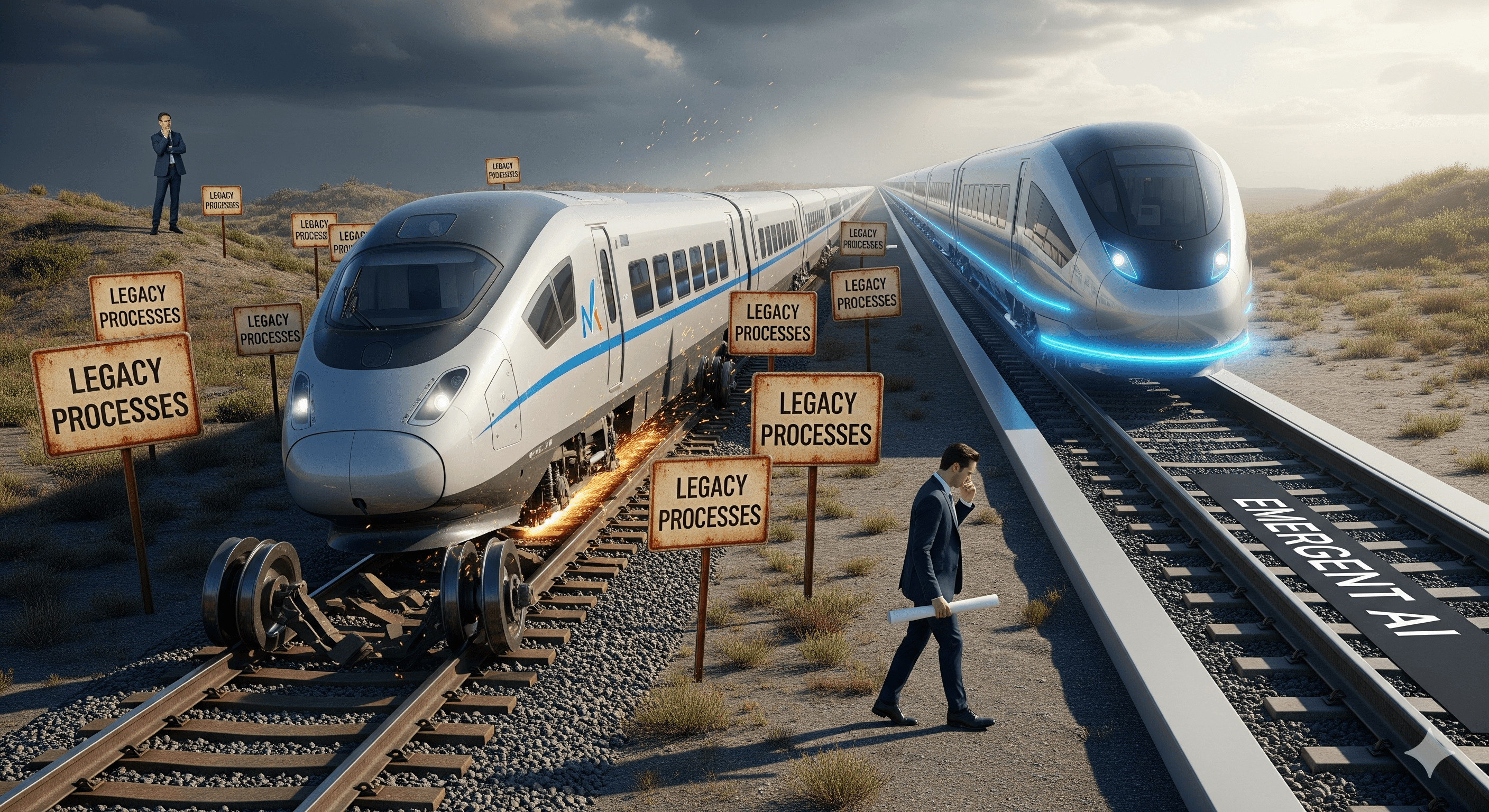
One consultant, reflecting on those years, often used the metaphor of a high-speed train being forced to run on tracks built for diesel locomotives. No matter how advanced the engine, the underlying infrastructure could not handle the velocity. The system would break. And often, it did. This lesson, that no system and no matter how advanced, can outperform the maturity of the process it serves—now echoes through the enterprise AI landscape. Once again, organisations are racing ahead. But the tracks are not ready.
This same paradox now plays out in the AI era. Leaders are introducing AI tools into environments that have not been designed to hold their pace or purpose. Just as with ERP, the excitement for performance may be driving transformation faster than organisations are structurally or ethically ready to support.
The Lure of the AI Promise
Source: Freepik
Enterprises today are shaped by decades of industrial thinking. Speed and performance are rewarded. Control and predictability are assumed. The illusion of certainty defines strategic decisions. Into this mould, AI is introduced not as a co-creative companion, but as an efficiency amplifier.
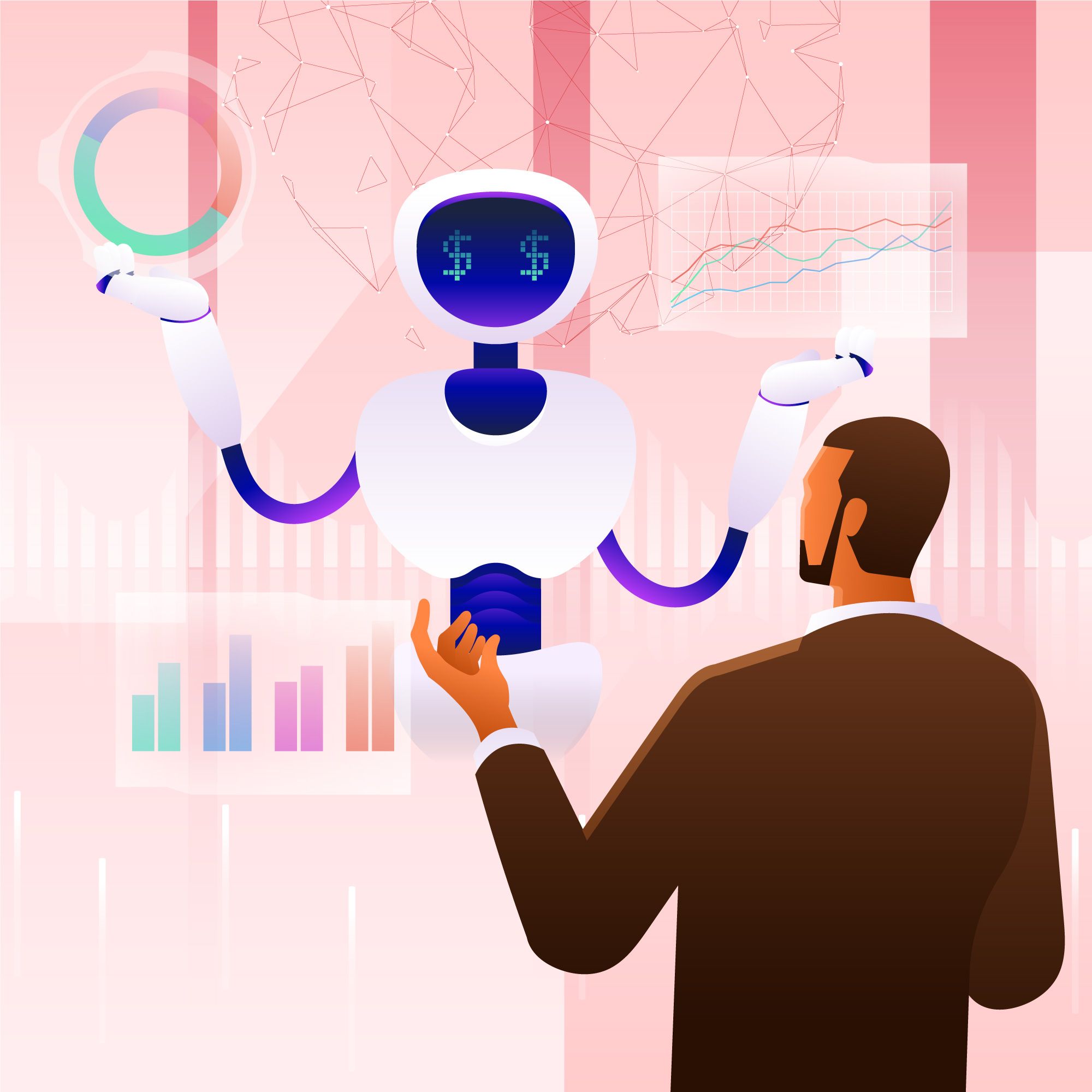
Leaders frame AI as a productivity tool, not a presence mirror. It becomes another KPI target, another box on a digital transformation roadmap. AI promises precision, productivity, and cost reduction. Vendors offer platforms that scan resumes in seconds, predict customer churn, and generate content at scale. But these performance metrics can be seductive traps. In the rush to demonstrate return on investment, leadership teams may implement tools before addressing foundational maturity.
A 2023 MIT Sloan Management Review report found that only 11 percent of companies had achieved significant financial benefits from AI, despite widespread experimentation. The problem is not with the technology but with the context into which it is deployed. Many organisations are chasing outcomes without first cultivating the internal structures and leadership mindsets necessary to hold AI’s presence. The report shows that true AI value only emerges when organisational culture, primarily leadership behaviour, is aligned with the adaptive and learning nature of AI.
Performance Without Presence
This phenomenon is what the Emergence Mirror framework refers to as performance without presence. It reflects a pattern where AI is introduced as a driver of output, while leaders and teams remain under-equipped to discern how that output aligns with values, workflows, and long-term stewardship.
In such settings, AI becomes an accelerant of existing dysfunction. Biases are automated. Inequities are amplified. Creativity is stifled by algorithmic predictability. Instead of unlocking emergent intelligence, enterprises trap themselves in cycles of scaling what they already know, definitely faster, but not necessarily better.
This leads to what might be called the maturity mismatch. It is a situation where the intelligence potential of AI exceeds the relational and reflective capacity of the humans who deploy it. The result is a loss of trust, not only in the technology, but in leadership itself.
This maturity mismatch is not merely a technological issue. It is a cultural signal—a call for leadership development at depth. Without the ability to hold paradox, stay present to emergence, and let go of rigid control, leaders end up driving AI adoption in a way that contradicts its very nature.
Read: Culture Drift: When AI Moves Faster Than Trust
Why Organisations Break Under AI Pressure
Much like the ERP metaphor, organisations falter under AI implementation because they lack the cognitive and structural infrastructure to host emergence. This includes:
- Fragmented leadership: Siloed decision-making weakens coherent AI adoption.
- Outdated processes: Legacy systems introduce friction that AI cannot resolve.
- Cultural immaturity: AI amplifies what exists. In low-trust cultures, fear and control dominate.
- Absent ethical reflection: Without conscious design, AI becomes a blunt tool for extraction.
Emotional presence, the ability to hold paradox, and the willingness to confront systemic shadow—these are rarely prioritised. Presence, in contrast, demands a slower, more relational approach. It requires leaders to observe how AI affects the field of their teams, not just the KPIs. It asks questions such as: Does this tool enhance trust? Does it allow for care in decision-making? Does it respect the rhythms of human work?
Or just as many technological advances that we have seen to date, the question to ask is what maturity requires,
What Maturity Requires
To move beyond the performance trap, leaders must shift from implementing AI onto the organisation, to integrating AI within it. This means holding space for emergence, understanding the relational dynamics between human and machine intelligence, and reframing AI as a companion rather than a solution.
The Emergence Mirror argues that organisational maturity is not just a function of digital readiness but of developmental leadership. A leader who can hold contradiction, honour relational dynamics, and create secure base environments is more prepared to steward AI wisely.
AI is not asking to be managed. Perhaps it is asking to be met. The deepest invitation it offers is not technical but relational. It is an invitation to leadership maturity—to hold space for emergence, to step beyond control, and to see intelligence not as a product, but as a field.
As enterprises navigate the next wave of AI development, it is worth asking: what if the greatest competitive advantage is not speed, but stillness? Not scale, but discernment?
And what if the real transformation is not in the tools, but in the humans who dare to mirror them? The performance trap can only be transcended through presence. And presence is a leadership choice.
Slowness as a Signal
Speed will remain part of AI’s promise. But slowness must become part of its practice. Leadership presence, not performance metrics, must anchor implementation. Without it, enterprises will continue to break under the illusion of acceleration.
The train metaphor reminds us: it is not about how fast one can go, but about how well the track has been laid—and whether the leaders at the helm can read the signs that emergence leaves behind.
Glossary
- Emergence Mirror: A leadership and AI framework that emphasises presence, field dynamics, and relational maturity over mere performance.
- Presence: The capacity of a leader to be aware, grounded, and relational in the midst of decision-making.
- Secure base: A psychological concept that refers to the trust and safety required for growth, learning, and creativity
Continue reading Part 2.
Step Into the Room Where Leaders Grow


Leadership
Tags: Artificial Intelligence, Executing Leadership, Systems & Structures
References:
- Dreyer, R. (2024). The human side of AI: Building confidence in leaders. LinkedIn. https://www.linkedin.com/pulse/human-side-ai-building-confidence-leaders-rudi-dreyer-xrglf
- Ransbotham, S., Khodabandeh, S., & Kiron, D. (2023). The State of AI in 2023: Generative AI’s breakout year. MIT Sloan Management Review. https://sloanreview.mit.edu/article/the-state-of-ai-in-2023-generative-ais-breakout-year/

Arul is currently an independent consultant working on improving the component level supply chain for a popular electric vehicle brand and also enabling the disruption of delivery services with cloud based technology solutions. He formerly was with GEODIS as the regional director of transformation and as the MD of GEODIS Malaysia. In GEODIS, he executed regional transformation initiatives with the Asia Pacific team to leapfrog disruption in the supply chain industry by creating customer value proposition, reliable services and providing accurate information to customers. He has driven transformation initiatives for government services and also assisted various Malaysian and Multi-National Organisations using the Lean Six Sigma methodology.